
Best Aesthetic Providers in Kansas
34 independently evaluated and peer-recognized aesthetic providers in Kansas.
2026 edition · Updated November 2026
EAG found no Kansas rule written specifically for tox or dermal fillers, while laser and light-based treatments sit under a physician's authority. These are the providers EAG rates highest in the state, chosen independently and never for payment.
Top Cities in Kansas
Top Injectors in Kansas
EAG found no Kansas law specific to tox, so injectors work under general rules such as physician delegation and nursing licensure. Ask about aesthetic training and, where it applies, the delegating physician.
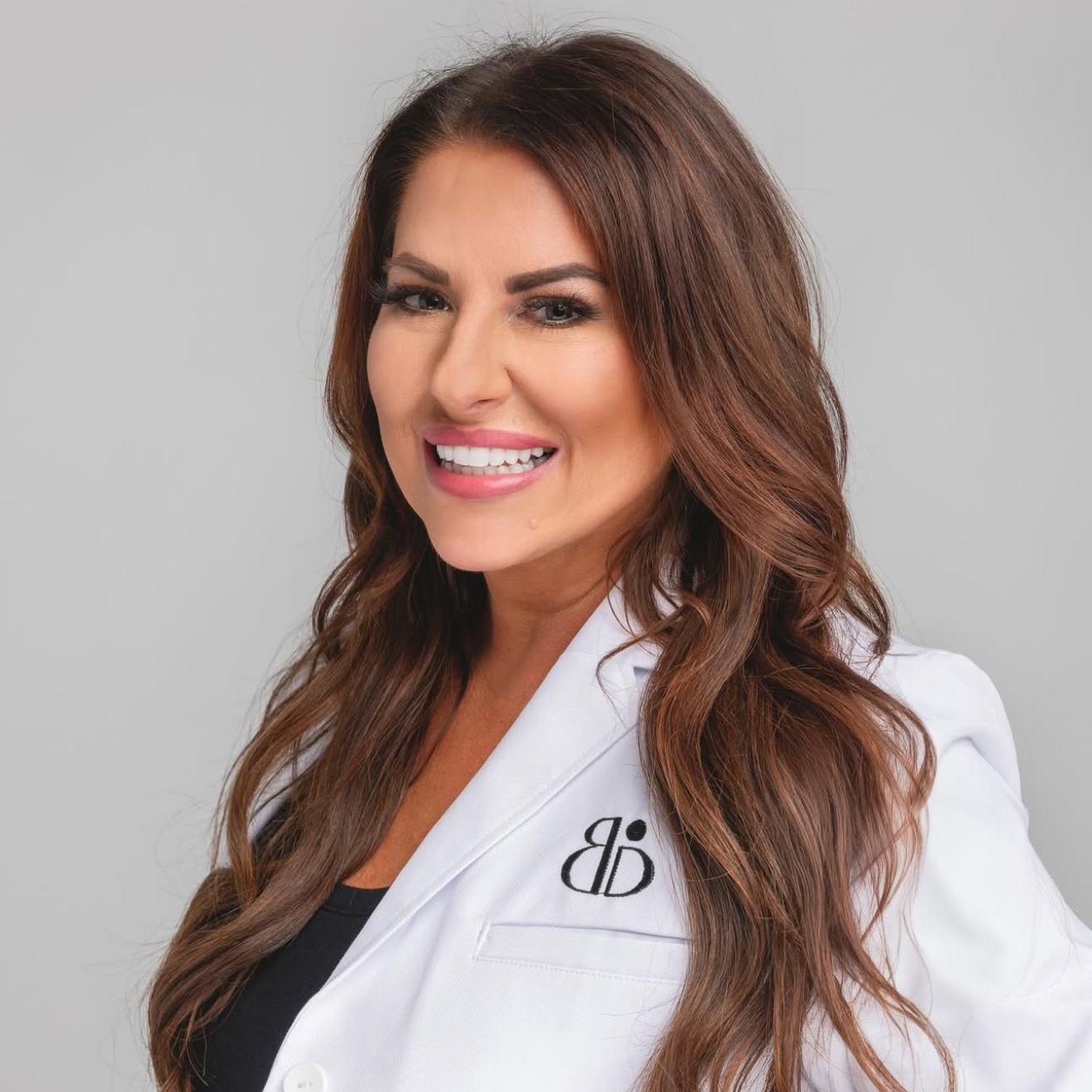
Marlene Pietrocola
DNP, MBA, RN
Injector
Top 10 Injector in Kansas
BeautyDot Medical & Day Spa
Ashley Williams
RN, BSN
Injector
Top 10 Injector in Kansas
SOKO Aesthetics & Wellness
Sophia Garozzo Koury
RN, BSN
Injector
Top 10 Injector in Kansas
SOKO Aesthetics & Wellness
Stephanie Oakman
MSN, FNP-C
Injector
Top 10 Injector in Kansas
Imbue Aesthetics & Wellness
Selena Fu
MD
Injector
Top 10 Injector in Kansas
RSVP Med Spa & Cosmetic Eye Institute
Beyond the Elite list in Kansas (3)Show
Licenses verified by EAG. Not ranked or selected: each has a license independently confirmed with the state board and re-checked on a schedule, and none holds a current Elite Aesthetics Guide award. What EAG Verified means
About aesthetic care in Kansas
No tox-specific rulebook in Kansas
EAG found no Kansas statute or board rule written specifically for tox (neurotoxins; FDA-approved cosmetic brands include Botox Cosmetic, Dysport, Xeomin, Jeuveau, Daxxify and Letybo) or dermal fillers. Minutes from the Kansas State Board of Nursing's Practice Committee in March 2023 record a staff statement that "Currently, there are no regulations surrounding IV hydration clinics, med spas, or botox." The same minutes note that the nursing board does not regulate businesses, and that many of the practice questions it receives concern "medical spas, IV hydration clinics, and botox."
What does apply is the general delegation law for physicians. Under K.S.A. 65-28,127, a physician may delegate only acts the physician believes the other person can competently perform, and only acts within the physician's own normal and customary specialty, competence and lawful practice. The responsible physician accepts responsibility for the actions of the people working under that delegation. The statute also lets the Kansas State Board of Healing Arts set limits and conditions on delegation and supervision.
Nurse practitioners after the 2022 law
A 2022 law, Senate Substitute for HB 2279, amended the Kansas statute for advanced practice registered nurses (APRNs). According to the Legislature's research summary, it removed language that tied APRN prescribing to a written protocol authorized by a responsible physician, and instead lets an APRN prescribe drugs consistent with the nurse's specific role and population focus. New APRN applicants since July 1, 2023 must also show national certification in their role and population focus. None of this is specific to aesthetics, so ask any nurse practitioner offering injectables about their aesthetic training.
Lasers fall under the Board of Healing Arts
The Kansas Board of Cosmetology states that the Board of Healing Arts, not the cosmetology board, regulates the use of light-based devices. The governing rule, K.A.R. 100-27-1, dates from June 2001 and was last amended in 2006.
It lets a Kansas-licensed physician (MD or DO) authorize another person to perform a light-based treatment only if the physician is immediately available, meaning in the same building or able to get there within five minutes, or a written practice protocol is in place. For class III and class IV devices, the physician must be physically present, or immediately available and working under a written protocol. That protocol must cover, among other things:
- Informed consent that identifies the treatment as a medical and surgical procedure.
- Treatment only at a location the physician maintains for their practice.
- Physician review and sign-off of the patient record within 14 days of treatment.
Estheticians: noninvasive work only
Kansas licenses estheticians through the Kansas Board of Cosmetology and issues no advanced or master esthetician license. Under K.S.A. 65-1901, an esthetician's work covers eyebrow and eyelash services and other noninvasive beautifying processes on the skin surface, by hand or with mechanical or electrical appliances other than electric needles, for esthetic rather than medical purposes. It also covers temporary hair removal, again without electric needles.
The Board's FAQ says Kansas estheticians may only perform noninvasive procedures and that esthetics "shall not alter, cut, or damage any living cells." In 2019 the Board approved dermaplaning and milia lancing for estheticians, for esthetic purposes only. The FAQ also says Class I medical devices registered with and approved by the FDA for general use are not barred when used for esthetic rather than medical purposes, and it answers "No" on laser tattoo removal, pointing to the Board of Healing Arts.
Checking a Kansas provider
EAG evaluates providers independently. This page is general information, not legal advice, and rules change, so confirm a provider's license with the Board of Healing Arts, the Board of Nursing or the Board of Cosmetology.
Frequently asked questions
Is there a Kansas law on who can inject tox or dermal fillers?
EAG found no tox- or filler-specific rule; March 2023 Kansas State Board of Nursing Practice Committee minutes record that "there are no regulations surrounding IV hydration clinics, med spas, or botox." Physicians may delegate tasks under K.S.A. 65-28,127 to people they believe can perform them competently, and they accept responsibility for that work.
Can an esthetician do laser treatments in Kansas?
The Kansas Board of Cosmetology says light-based devices are regulated by the Board of Healing Arts, not by the cosmetology board. Under K.A.R. 100-27-1, a physician may authorize another person to use a light-based device only if the physician is immediately available or a written protocol is in place.
Does a physician have to be on site for laser treatment in Kansas?
For class III and class IV devices, the physician must be physically present or immediately available, meaning in the same building or able to arrive within five minutes, with a written protocol. For other light-based devices, the physician must be immediately available or have a written protocol in place.
Can Kansas estheticians do dermaplaning?
Yes. The Kansas Board of Cosmetology approved dermaplaning and milia lancing for estheticians in 2019, for esthetic purposes only, and says esthetics must not alter, cut or damage living cells.
Do Kansas nurse practitioners need a physician's protocol to prescribe?
A 2022 law, Senate Substitute for HB 2279, removed language tying APRN prescribing to a physician-authorized written protocol and lets APRNs prescribe drugs consistent with their role and population focus. Confirm current requirements with the Kansas State Board of Nursing.
Sources
- Kansas State Board of Nursing, Practice Committee approved minutes, March 2023
- K.S.A. 65-28,127, supervising, direction and responsible licensees (Kansas Legislature)
- Kansas State Board of Nursing, APRN regulations notice (June 30, 2022)
- Kansas Legislative Research Department, Supplemental note/summary of HB 2279 (2022)
- Kansas Board of Cosmetology, Frequently Asked Questions
- K.A.R. 100-27-1, Supervision of light-based medical treatment (Kansas State Board of Healing Arts; Cornell LII copy)
- K.A.R. 100-27-1, Supervision of light-based medical treatment (Justia copy, current through Kansas Register Vol. 44, No. 26, June 26, 2025)
- K.S.A. 65-1901, Kansas cosmetology definitions (Kansas Legislature)
- Kansas State Board of Healing Arts licensee search (physicians, PAs)
- Kansas State Board of Nursing license verification (RNs, LPNs, APRNs)
- Kansas Board of Cosmetology license verification (estheticians)